

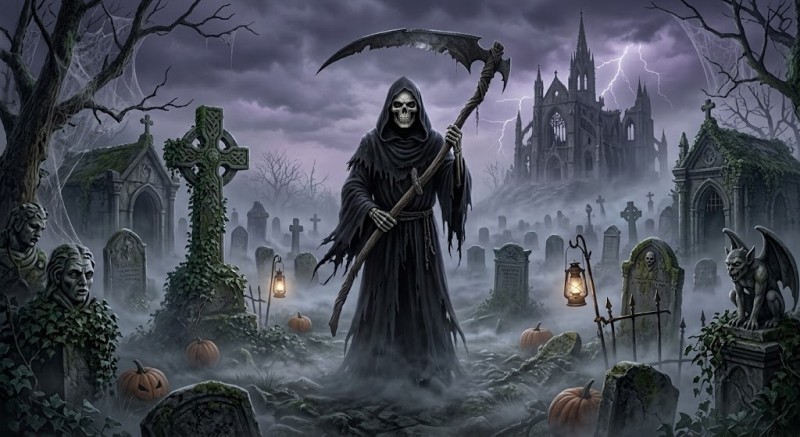
Death—universally recognized as the Grim Reaper—is one of the oldest and most enduring personifications of mortality in human history.
His visual signature is unmistakable: a skeletal figure shrouded in a sweeping black cowl and hood, with a hollow, shadowed void where a human face should be or skeleton face, depending on the source. In his bony grasp he carries a towering scythe—a farming tool symbolizing the harvest of human souls, severed like stalks of grain when their time has come. In folklore and religious lore, he is also depicted mounted atop a pale, spectral steed, echoing the Fourth Horseman of the Apocalypse.

Across global mythology, the Reaper functions as a psychopomp—a spiritual guide tasked not with malicious murder, but with collecting the departed and escorting them into the afterlife. He is the ultimate threshold guardian, often portrayed as the very last sight a dying person beholds. This inescapable certainty gave birth to enduring folktales of clever tricksters challenging Death to bets, riddles, or games of chess in a desperate bid to cheat fate and gain borrowed time.
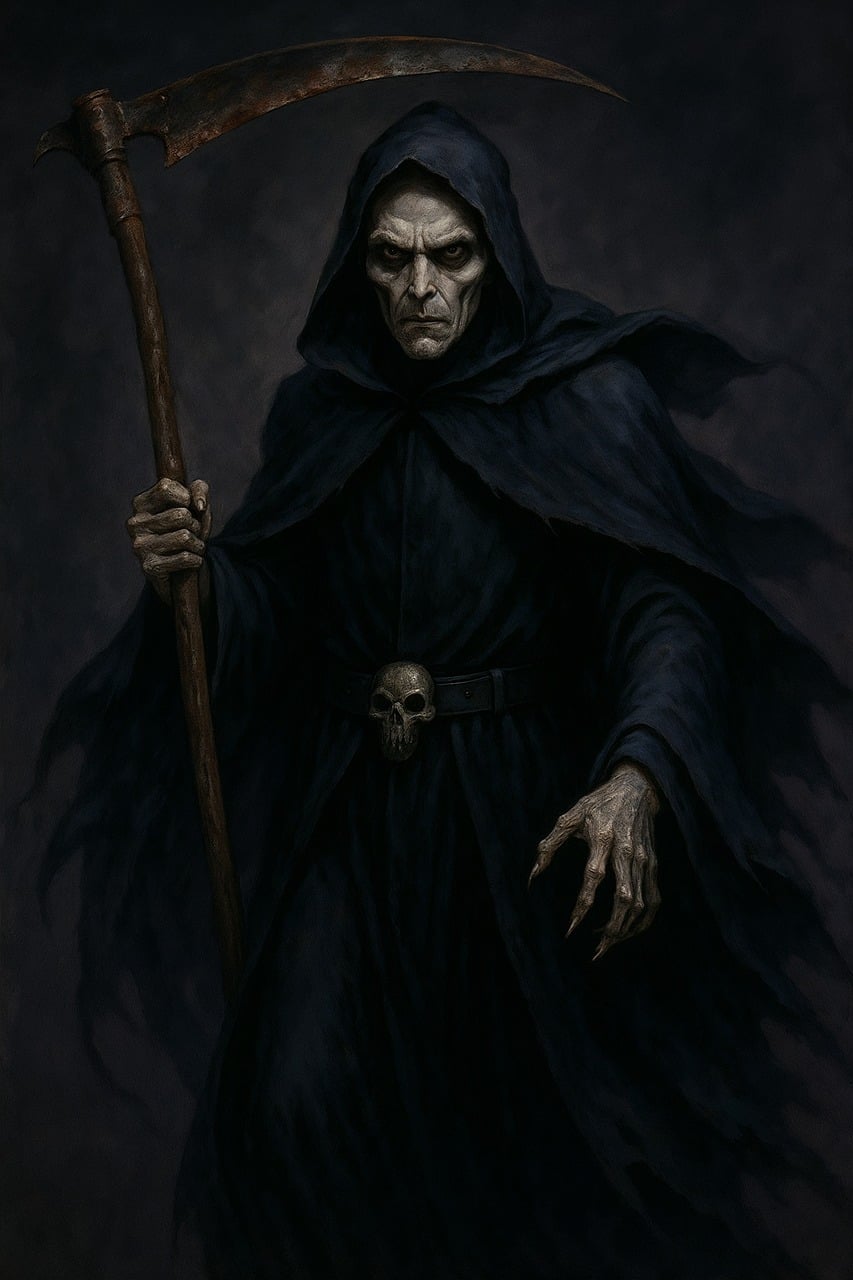
The iconic imagery of the Grim Reaper crystalized during the Late Middle Ages, driven by the sheer devastation of the Black Death in the mid-14th century. As plague cartloads cleared mountains of corpses from quarantined cities, European art developed the Danse Macabre (Dance of Death). Depictions of robed skeletons reaping souls served as a grim memento mori, reminding society that whether a peasant, pope, or king, no one escapes the scythe.

In modern pop culture, the Grim Reaper has transcended grim morbidity to become a premier icon of horror and Halloween. Embodying our primal fear of the death, the Reaper remains a constant centerpiece in seasonal cinema, gothic literature, masquerade attire, and looming animatronic displays worldwide.