

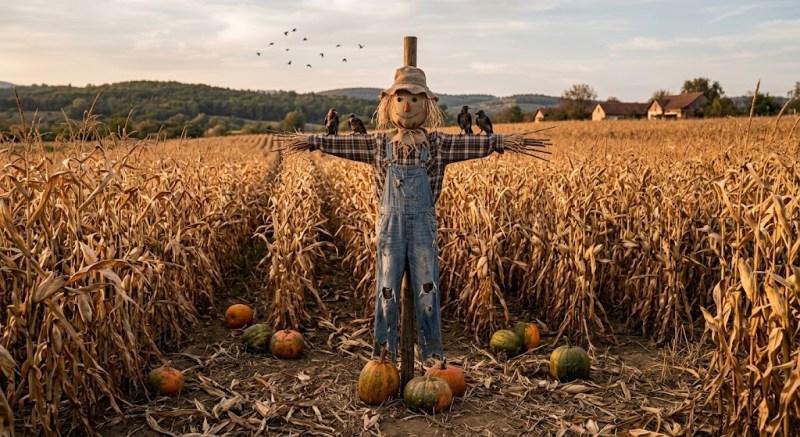
A scarecrow is a humanoid effigy typically constructed from straw, hay, and discarded clothing. Its primary purpose is to deter pest birds—most notably crows—from feeding on crops and seedbeds. Historically and to this day, scarecrows are placed across the globe in grain fields, corn mazes, and vineyards.
The scarecrow’s strong connection to Halloween stems from several factors:
– The Harvest Connection: Halloween’s ancient Celtic precursor, Samhain, marked the end of the harvest season. As a fixture of autumn fields, the scarecrow is naturally intertwined with seasonal folklore and agricultural endings.
– Inherent Eeriness: Built to frighten pests, a scarecrow is an inanimate, faceless or distorted imitation of a human being. This uncanny quality makes it an ideal fit for horror tropes alongside ghouls and specters.
-Guardian of the Pumpkin Patch: In rural landscapes, scarecrows often overlook cornfields and pumpkin patches—the very crops harvested to craft Jack-o’-lanterns. In essence, the scarecrow stands guard over Halloween’s most iconic symbol long before the holiday arrives.

Because of this haunting imagery, scarecrows have become enduring fixtures in horror cinema and fiction, inspiring a staple category of costumes, masks, and seasonal decor in Halloween stores worldwide.